

The Ex-SpaceX Founder Building a Distributed AI Cloud in Orbit
When the Boss Says No
According to TechCrunch, Satlyt‘s co-founder pitched his concept for running distributed AI workloads on satellite constellations while working as a product manager at SpaceX. Both SpaceX and Google, where he had previously worked, declined to back the idea. He left and founded the company himself. What followed carries a particular kind of symmetry: Satlyt’s software is now scheduled to ride to orbit on a SpaceX rocket, alongside Google’s own payloads.
On October 13, 2026, Satlyt announced an $8 million seed round led by Houston-based Non Sibi Ventures. It is a modest sum relative to the multi-billion dollar packages circulating in AI infrastructure, where Broadcom and Nvidia are mobilizing hundreds of billions in third-party capital to fund data centers and chip purchases. For a seed-stage company trying to define an entirely new category, however, the round signals genuine institutional confidence. The company operates out of both Sunnyvale, California and Nairobi, Kenya, a dual footprint that is central to its strategy and not simply a geographical footnote.
Satellites as a Distributed Computing Layer for AI
The technical premise is easier to grasp than it first sounds. Most satellite AI today follows a familiar pipeline: sensors collect data in orbit, downlink it to ground stations via radio links, and Earth-based servers handle the processing. That model is effective but carries real costs. Bandwidth is limited and expensive. For applications requiring near-real-time analysis, such as maritime surveillance or wildfire detection, waiting for a ground pass introduces delays that can matter operationally.
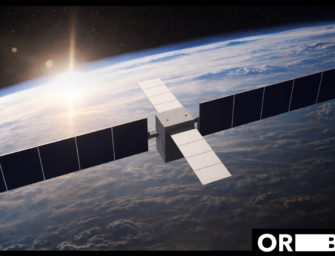
Satlyt’s approach is to place the computation in orbit. Its software layer is designed to coordinate multiple satellites so they share AI processing tasks across the constellation, much as distributed computing systems divide work across clusters of servers. The company is not building its own satellites. It is building the software stack that rides on existing or future spacecraft and orchestrates workloads cooperatively across them. A useful analogy: a cloud operating system designed for a fleet of machines traveling at roughly 28,000 kilometers per hour.
Processing data in orbit also reduces the volume of information that must be transmitted back to Earth, cutting operating costs for satellite operators and enabling denser AI applications in space. The most obvious near-term targets are earth observation and environmental monitoring, alongside logistics and infrastructure surveillance for regions with limited ground connectivity.
Why Nairobi Is Not Just a Flag on a Map
Satlyt’s decision to anchor part of its operations in Nairobi deserves more than a passing mention. Kenya has built a recognized track record in fintech and mobile innovation, most visibly through M-Pesa. But Satlyt’s presence points toward something less discussed: the emergence of deep-tech ventures rooted on the African continent that are contributing to upstream infrastructure, not simply adapting existing software for local markets.
Satellite-based services are, across much of Africa, the primary viable layer of digital infrastructure. Connectivity gaps and large rural populations with limited terrestrial networks mean that AI-powered earth observation, whether for precision agriculture or climate response mapping, carries genuine applied urgency. A company headquartered partly in Nairobi is not only tapping a talent pool; it is positioning itself to shape services that a large and underserved market will depend on long before terrestrial alternatives arrive.
This also reflects a broader shift in how African cities are participating in global tech. A space-AI startup with dual U.S.-Kenya offices, backed by U.S. institutional capital, suggests a maturation in how deep-tech ventures are being built with African markets rather than simply for them. It is a model that differs meaningfully from the mobile-first consumer apps that defined the previous generation of pan-African innovation.
An Astronaut Investor and What the Backing Signals
Non Sibi Ventures, the lead investor in Satlyt’s seed round, is a Houston-based firm whose partner Bernard Harris brings more than twenty years of experience as a NASA astronaut. That credential carries real weight in a sector where technical credibility is difficult to fake. For Satlyt, Harris’s involvement connects the startup to networks across the aerospace and earth observation industries, including potential customers in defense and commercial satellite operations.
At $8 million, the round funds a proof-of-concept phase, not a full-scale rollout. Satlyt’s near-term task is to demonstrate that its software stack functions reliably on orbiting hardware, to build partnerships with satellite operators willing to adopt the platform, and to generate early data on the cost and performance gains it promises. Successful results would position the company for significantly larger follow-on funding from infrastructure-oriented investors already deploying capital at scale across the AI-space intersection.
The broader context is worth holding in view. As AI infrastructure becomes a geopolitical and corporate priority, the question of where computation actually happens is increasingly strategic. Most of that debate today centers on terrestrial data centers and their voracious demand for energy and chips. Satlyt is proposing that orbit is a viable third tier, distinct from cloud and edge computing, suited to AI workloads that generate data in space and benefit from staying there.
A Startup With Two Maps and One Bet
Satlyt occupies an unusual position in the current AI landscape. It is small enough to move quickly but operating in a domain where technical barriers to entry are genuinely high and the timeline to meaningful deployment is measured in years, not months. The co-founder’s trajectory, from Google to SpaceX to an independent startup whose software will fly on SpaceX’s own rockets, offers a vivid illustration of how a rejected idea can become the foundation of a standalone competitive venture.
Whether the orbital AI concept proves foundational or remains a specialized tool is a question the next few years will answer. How satellite operators price distributed compute, and whether Satlyt can secure early customers before larger cloud providers or satellite manufacturers move into the same category, will be the decisive variables. The Nairobi anchor adds a layer of strategic depth that few competitors in this space can currently claim.
For a company told no by two of the most powerful organizations in its field, Satlyt has found a starting position that is genuinely hard to replicate. Nairobi and Sunnyvale, taken together, suggest it is staking a claim on where the next layer of the internet might actually be built.


















There are no comments
Add yours