
Nvidia’s $13 Billion Hugging Face Acquisition Puts Open-Source AI to the Test
Nvidia confirmed its acquisition of Hugging Face on September 3, 2026, for $12.93 billion, its second-largest deal to date. The platform, founded in 2016 as a chatbot app with a name borrowed from an emoji, had quietly pivoted into the infrastructure layer of modern AI: a hub where researchers and enterprise engineers go to find pre-trained models, share datasets, and deploy applications at scale. By that point, Hugging Face was hosting approximately three million AI models, half a million datasets, and around one million applications, with more than 18 million developers using the platform across 200,000 companies. That is not a startup. It is a commons.
Fortune pegs Hugging Face’s annualized revenue at roughly $150 million, which means Nvidia is paying close to 86 times revenue. That multiple is not a slip of the calculator. It reflects a deliberate decision to pay for position rather than profit. Hugging Face sits at a junction that every serious AI practitioner crosses regularly: finding a model, fine-tuning it, evaluating alternatives, deploying to production. Owning that junction is worth far more than any revenue multiple conveys on paper.
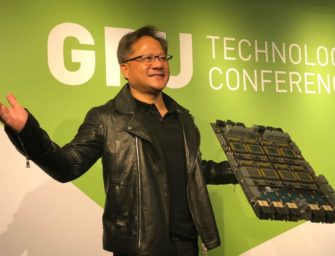
The deal is expected to close in the first half of 2027, pending regulatory approvals. CEO Jensen Huang addressed concerns preemptively in a blog post, stating that Hugging Face would “remain an open platform for the entire AI ecosystem” and that Nvidia compute would not be required to build or deploy through it. The reassurance was swift, and that swiftness is itself telling: Nvidia knows that any hint of lock-in would alienate the very community it just paid $13 billion to join.
What Nvidia Is Really Buying
The chip business is, by definition, a hardware play. Nvidia’s GPUs power the training runs behind virtually every major foundation model in production today. But hardware has a ceiling. Companies can diversify chips, use cloud credits, or shift across providers. Owning the platform where developers choose their models and frameworks is structurally different. It creates a daily touchpoint, a dependency that compounds quietly over time. GitHub has this quality. Android has it. Now Nvidia wants Hugging Face to have it too.
There is also a commercial logic that operates below the surface. Hugging Face’s model hosting and inference API services generate natural demand for high-performance compute. The more developers rely on the platform, the more they will gravitate toward infrastructure that integrates smoothly with it. Nvidia does not need to force that integration; making the experience noticeably better for teams already running on its hardware is sufficient. Network effects do the rest.
The valuation fits within a broader pattern. Crunchbase data show that global venture funding reached $42 billion in August 2026, more than double the figure from August 2025, with a significant share flowing into AI infrastructure. Crusoe, a data-center developer, raised $3 billion in the same week at a $30 billion valuation. Fluidstack secured $1.5 billion. Capital is flooding into the layers of AI that sit below the applications everyone sees, and Nvidia’s Hugging Face deal is the most visible expression of that logic at the platform level.
The Open-Source Question
The tension is real, even if it is not yet a crisis. Hugging Face built its reputation precisely because it was not owned by a chip company or a foundation model lab. That independence made it credible as a neutral marketplace. Researchers at universities, engineers at early-stage startups, and AI teams inside large corporations contributed freely, without worrying that the platform would quietly favor one provider’s tools over another’s. Huang’s assurances are genuine by all current indications. Assurances, however, are not governance structures.
Concrete questions deserve concrete answers in the months ahead. Will Hugging Face’s discovery algorithms continue to surface models running on AMD, Google TPUs, or Arm-based chips on equal footing with those optimized for Nvidia hardware? Will datasets and evaluation benchmarks remain openly licensed, or will enterprise services built on top of them gradually require Nvidia accounts? Will open-source maintainers retain editorial independence over how models are curated and promoted? None of these are hypothetical. They are the practical tests by which the developer community will judge whether Huang’s promise holds.
There is also a regulatory dimension worth watching. The acquisition enters review in a climate where multiple jurisdictions are drafting or actively implementing AI governance frameworks. A dominant chipmaker owning the central repository for open-source models is precisely the kind of vertical structure that invites scrutiny, particularly if competitors later claim that Hugging Face’s tooling drifts toward Nvidia-friendly configurations. Regulators in the United States and Europe have shown they are willing to examine concentration in digital infrastructure closely, and this deal will be on their radar well before the anticipated close in early 2027.
What Developers and Enterprises Should Watch
For the roughly 18 million developers who use Hugging Face daily, near-term experience will likely change very little. Nvidia has no incentive to disrupt a community it just spent $13 billion to join. The practical risks emerge over a longer horizon, as product roadmaps evolve and commercial priorities shift under new ownership.
For enterprise AI teams, the more immediate question is governance. Organizations that have built critical workflows on Hugging Face’s models and APIs should review their dependency structures, clarify which services carry open-source licenses versus proprietary terms, and monitor how pricing and access policies change after the deal closes. That is not a reason to abandon the platform. It is standard due diligence for any infrastructure that has changed ownership at this scale.
For the open-source community at large, the acquisition is a reminder that platforms do not stay neutral forever. Hugging Face thrived by solving a real problem: finding and deploying AI models was genuinely hard before it existed. If that utility holds under Nvidia’s ownership, developers will adapt. If it does not, alternatives will emerge. Open-source has a reliable history of routing around concentration when the incentive to do so becomes strong enough.
















There are no comments
Add yours