

Ocean Autonomy Attracts Billions as Venture Capital Discovers the Maritime Frontier
Nearly $3 Billion in Venture Capital Flows Into Marine Startups
For decades, the ocean has been treated as infrastructure rather than opportunity. Shipping lanes, undersea cables, port logistics, fishing fleets: useful, essential, but not particularly exciting to venture capitalists accustomed to software margins and consumer apps. That calculus is shifting. Over the past year, investors poured close to $3 billion into sizable rounds for marine-related startups spanning autonomous vessels, water robots, electric watercraft, and ocean data systems, according to Crunchbase News. The number is striking not just for its size, but for what it signals: the ocean is no longer being left out of the technology investment map.
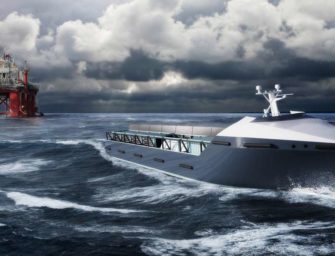
The single largest bet in that pile belongs to Saronic, an Austin-based company building autonomous sea vessels for the U.S. Navy. In March 2026, Saronic closed a $1.75 billion Series D at a $9.25 billion valuation, a round that instantly positioned it as one of the best-funded defense tech startups of the year. That scale of raise reflects something beyond standard venture logic. It suggests investors believe autonomous maritime systems are not a niche procurement line item but a structural priority for naval powers rethinking how they project force and maintain maritime surveillance across contested waters.
Defense Applications and the Decarbonization Imperative
The defense angle is hard to ignore, and Crunchbase is explicit about it: a significant portion of marine startup investment has military applications, coinciding with a broader surge in venture capital flowing toward startups with defense relevance. But Saronic is not the only story, and the marine sector cannot be reduced to naval contracts alone.
Regent, based in Rhode Island, is building what it calls Seagliders: vessels that skim just above the water’s surface at aircraft-like speeds, using a principle known as wing-in-ground-effect flight. The company raised $120 million in Series B equity in August 2026, alongside a $120 million debt facility. Regent’s pitch is primarily civilian: faster coastal passenger transport and cargo routes with lower emissions than aviation. The technology is compelling precisely because it occupies a speed and cost range that no existing vehicle covers well, sitting in the gap between a conventional ferry and a short-haul plane.
Fleetzero, another company receiving venture attention in recent funding cycles, is building battery-electric cargo ships aimed at decarbonizing short-sea shipping, one of the most fuel-intensive segments of global logistics. These are not moonshot bets on exotic propulsion. Fleetzero targets routes where battery technology is already viable, arguing that the transition to electric vessels on shorter corridors can begin now, without waiting for next-generation energy storage.
What connects Saronic, Regent, Fleetzero, and the broader cohort of marine startups is a convergence of enabling conditions: advances in autonomous navigation, cheaper and denser battery packs, more capable sensor arrays, and AI systems that can process complex, variable ocean environments. The same hardware and software breakthroughs that drove investment in terrestrial autonomous vehicles and aerial drones are now reaching the water, with a meaningful delay but similar momentum.
China’s Marine Push and the U.S. Venture Response
The geographic scope of the marine funding surge is itself notable. Seahi Robotics, a Chinese company developing marine robotics technology, closed a $150 million Series A in July 2026, indicating that this is not purely a Silicon Valley or Pentagon-adjacent story. China has substantial strategic interests in maritime technology. It operates the world’s largest commercial fishing fleet and maintains assertive territorial claims in contested sea lanes. The country has also invested heavily in port infrastructure globally. A Chinese marine robotics startup attracting that level of capital at Series A stage points to a broader national priority, not just isolated entrepreneurial activity.
On the U.S. side, generalist venture firms that once focused almost exclusively on software and consumer tech are staking positions across the marine sector. Andreessen Horowitz and Founders Fund have both made multiple investments in marine startups, with portfolios spanning from autonomous vessel technology to ocean renewable energy, according to Crunchbase. The entry of these marquee firms matters for more than just the capital they bring. Their involvement signals to the broader venture community that the sector is now legitimate and commercially legible, with enough potential liquidity to justify follow-on rounds and eventual exits.
Panthalassa, another Founders Fund-backed company, focuses on ocean renewable energy, exploring how the ocean itself might generate power in addition to serving as a transport corridor. Its inclusion in a generalist fund’s portfolio alongside terrestrial energy plays suggests investors are beginning to treat ocean energy as part of a diversified climate infrastructure thesis rather than a curiosity.
The Conditions Driving the Current Investment Surge
Several forces appear to be converging at once. Geopolitical tensions have made maritime security a higher priority for governments and defense procurement agencies, creating a more reliable customer base for companies like Saronic. Climate commitments have turned the decarbonization of shipping from aspiration into regulatory and commercial imperative, opening markets for Fleetzero and its peers. And technological readiness has crossed a threshold: autonomous navigation in open water, once prohibitively unreliable, is now good enough to support meaningful pilot deployments.
There is also a structural argument about capital allocation. After years when most venture capital flowed into AI and software-first sectors such as fintech and consumer apps, some investors are actively seeking sectors where competition is less intense than in software and incumbents are harder to dislodge, and where hardware and operational complexity create genuine moats. Building and operating autonomous vessels or electric cargo ships requires engineering depth and maritime domain expertise that a well-funded software team cannot replicate quickly, alongside relationships with port authorities and naval partners that take years to build. The ocean, in that sense, is attractively defensible.
Real Stakes and the Questions That Remain
The enthusiasm is justified, but the risks deserve honest attention. Marine environments are harsh and unpredictable in ways that stress autonomous systems differently than roads or warehouses. Regulatory frameworks for unmanned vessels are still being written in most jurisdictions, creating meaningful uncertainty about commercial deployment timelines. The capital intensity of building actual ships, even small ones, means many of these startups will require continued large rounds before reaching profitability, and their exit paths are less established than for software platforms.
The environmental dimension also warrants scrutiny. Rapid deployment of autonomous vessels and underwater robotics could affect marine ecosystems in ways that are not yet fully understood, particularly if the technology enables more intensive industrial fishing or accelerates seabed resource extraction under the cover of clean-tech branding.
What the nearly $3 billion flowing into marine startups represents, at its core, is a belated recognition that 70% of the planet’s surface has been systematically underinvested from a technology perspective. The ocean is not a backdrop. It is critical infrastructure for global trade and maritime security, and a key variable in climate outcomes. Saronic’s billion-dollar raise, Seahi’s Series A, Regent’s Seagliders, and the quiet backing of Andreessen Horowitz and Founders Fund all point to the same conclusion: venture capital has finally looked down at the water and decided it cannot afford to keep looking away. Whether the companies now attracting that capital will deliver on their technical and commercial promises is a question that will take years, and certainly more capital, to answer.

















There are no comments
Add yours