
Google Bets on Nuclear to Fuel the AI Boom
AI’s Electricity Problem Has No Simple Fix
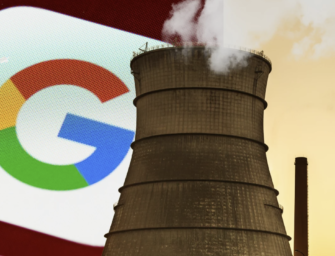
The numbers that define modern AI do not live in servers alone; they live in watts. Training a single large language model now consumes roughly as much electricity as several thousand American homes use in a year, and inference workloads run continuously, with no seasonal pause. Google operates one of the largest fleets of data centers on the planet, and the company has acknowledged that its energy demand is rising faster than its renewable capacity can cover. Solar panels go dark at night; wind turbines stall in still air. Nuclear reactors produce steady, low-carbon baseload power, and that practical difference is exactly why Google signed an agreement with California-based nuclear startup Kairos Power in fall 2024, committing to approximately half a gigawatt of atomic electricity by 2035.
That long-term commitment just turned into a construction contract.
Samsung C&T Enters the Data Center Energy Race
On September 21, 2026, Kairos Power announced that it had selected Samsung C&T, the engineering and construction arm of the South Korean conglomerate, to help build the Hermes demonstration reactor at Oak Ridge, Tennessee. The arrangement includes up to $100 million from Samsung C&T, split between approximately $70 million in equity and the remainder delivered as in-kind engineering work. Kairos is already building two reactors at the Oak Ridge site, and the Hermes unit, rated at 50 megawatts, will serve as the first physical installment of Google’s nuclear energy program, with a target completion date of 2030.
What makes this deal structurally different from a standard power purchase agreement is the depth of corporate commitment on both sides. Google is not simply contracting to buy electricity from a utility; it is helping to finance the infrastructure that will generate that electricity, with Kairos Power as the vehicle and a timeline measured in years, not quarters. For Kairos, the Hermes unit is a demonstration reactor precisely because it must show investors and regulators that the technology works before the company can deliver the larger capacity Google’s half-gigawatt target will require. The company’s reactor uses fluoride salt as a coolant rather than water, allowing higher operating temperatures and lower pressures than conventional plants, a design that is cleaner in theory but has not yet been proven at commercial scale.
Samsung C&T’s role goes well beyond writing a check. The firm brings decades of experience managing large-scale industrial construction, including nuclear facilities in South Korea. Its participation as both equity investor and engineering partner signals that it sees AI-dedicated nuclear capacity as a durable market opportunity, not a niche project. By embedding itself in the Hermes program from the outset, Samsung C&T positions itself to bid on subsequent reactors and, potentially, on similar contracts if other hyperscalers follow Google’s lead.
A Three-Continent Deal with Global Stakes
The Kairos-Samsung C&T-Google alliance illustrates a broader pattern in how AI infrastructure is being assembled: not within a single country or corporate ecosystem, but across geographies and engineering traditions. A U.S. nuclear startup is relying on South Korean engineering capital to deliver clean power for a globally distributed technology giant, at a site in Tennessee with a long history in the American nuclear program. Each actor brings something the others cannot easily replicate.
For Google, the value is straightforward: reliable, low-carbon baseload power that does not depend on weather or grid availability. Kairos gains capital and construction expertise at a moment when the company needs to move from prototype to operating plant. For Samsung C&T, the Hermes project is a foothold in a market at the junction of advanced nuclear technology and AI infrastructure, one that could expand considerably if the technology matures and competing tech companies follow Google’s example.
This cross-border arrangement also reflects something important about where AI’s physical backbone is being built. Crusoe, the data center developer that recently raised $3.9 billion in a Series F round, has built its thesis around specialized “AI factories” powered by unconventional or stranded energy sources. Kairos represents a different model: rather than repurposing existing energy flows, the goal is to generate entirely new dedicated capacity, engineered from the ground up for the reliability and power density that AI workloads demand. These two approaches together suggest that the energy infrastructure underpinning the next decade of AI will be far more capital-intensive, and far more geographically distributed, than a simple extension of the existing electricity grid.
The Long Horizon of a Strategic Bet
For business leaders outside the energy and AI sectors, the Kairos-Google-Samsung C&T deal offers a concrete illustration of planning under genuine uncertainty. Google’s commitment to Kairos dates to fall 2024 and will not produce its first electricity until 2030, more than five years after the original agreement was signed. That kind of horizon is rare in an industry that typically thinks in quarterly cycles. It also carries real risk: nuclear projects have a long history of cost overruns and construction delays, and Kairos’s fluoride-salt technology has yet to be proven at commercial scale.
Whether the bet pays off will depend on factors no single company controls: regulatory timelines and construction costs chief among them, as AI workload growth continues to outpace available grid capacity.
Nuclear energy for data centers is not, by itself, a new idea. What the Kairos-Google-Samsung C&T deal makes concrete is the scale and cross-border complexity now required to pursue it seriously. The real question for the rest of the industry is not whether AI needs more power, but whether other companies are willing to commit to the same kind of long-duration, capital-intensive bets. In energy, as in AI itself, those who act earliest tend to shape the rules everyone else eventually inherits.






There are no comments
Add yours