

Nvidia’s $5 Billion Bet on Safe Superintelligence Redraws the AI Power Map
How SSI Secured $7 Billion and an Nvidia Compute Deal
Ilya Sutskever spent two years saying almost nothing. After departing OpenAI in May 2024, one of the most influential researchers in the field retreated into a studied silence, offering little detail about his next move beyond the name of the company he was building: Safe Superintelligence, or SSI. That name was, by design, its own complete mission statement.
The silence ended last week. SSI announced a long-term partnership with Nvidia that will give the lab access to the chipmaker’s forthcoming Vera Rubin GPU platform and increase its available compute “by an order of magnitude,” according to TechCrunch. Crunchbase News and Bloomberg reported the investment at approximately $5 billion, bringing SSI’s total capital raised to around $7 billion and pushing its post-money valuation to roughly $32 billion. For a company that has yet to release a product, the figures are extraordinary.
When a Chip Vendor Becomes a Strategic Partner
The architecture of this deal deserves scrutiny. Nvidia is not simply selling GPUs to a well-funded lab. The partnership involves joint work on future compute platforms, with SSI providing Nvidia insight into what TechCrunch describes as “overlooked aspects of how the human brain functions.” That is a long way from a standard enterprise contract.
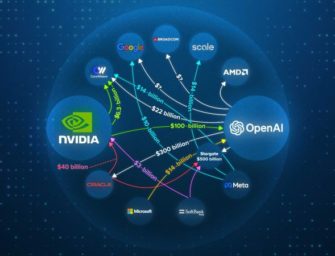
What is emerging, with this deal and with similar arrangements between Nvidia and other frontier labs, is a new kind of relationship that sits somewhere between vendor and co-investor. Nvidia supplies compute; the lab supplies research directions and a long-term guarantee of hardware demand. Both parties gain a stake in each other’s success. For Nvidia, whose dominance in AI chips is currently unrivaled, binding itself to the most research-intensive labs in the world reduces the risk that those labs will eventually migrate to a competitor’s stack.
This logic also explains why the dollar figure matters. A $5 billion commitment is not just a sign of confidence in Sutskever’s research agenda. It is a signal to the rest of the industry that Nvidia intends to be more than a commodity supplier, positioning itself as the infrastructure layer through which the most ambitious AI research flows.
The Valuation Question
A $32 billion valuation for a pre-product lab naturally invites skepticism. SSI has no publicly documented revenue stream or announced launch date, and operates with a level of secrecy that is unusual even by frontier-AI standards. That valuation rests on the perceived quality of its founding team, the scope of its stated mission, and the willingness of sophisticated investors to pay a premium for proximity to “safe superintelligence” research.
Whether that premium is justified depends on questions that cannot yet be answered. If SSI develops a genuinely novel approach to building aligned, robust AI systems, its intellectual property could prove valuable far beyond the initial compute investment. If it does not, the valuation will look, in retrospect, like a bet placed at the height of an overheated cycle.
Jensen Huang’s Public Stance on Open Weights
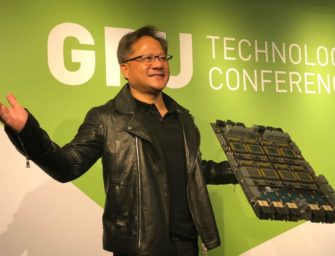
The SSI partnership arrived alongside a separate but connected move by Nvidia CEO Jensen Huang. According to Fortune, Huang used X to publish an open letter titled “Open Weights and American AI Leadership,” co-signed by Meta, Perplexity, Microsoft and others. The letter argues that openly available AI model weights strengthen safety and innovation while supporting technological “sovereignty.”
The timing is not coincidental. U.S. policymakers are actively debating restrictions on Chinese AI models and tightening export controls on advanced chips. In that context, Huang’s letter reads as a strategic intervention: by framing open-weight models as a matter of national security and technological competitiveness, he aligns Nvidia’s commercial interests with the priorities of American policymakers. Nvidia sells chips globally, and restrictions that limit the proliferation of any AI model architecture, foreign or domestic, could constrain its markets.
That observation is not a criticism. It is a recognition that in major technology policy debates, the advocacy of large companies is rarely purely altruistic, nor entirely cynical. Huang may genuinely believe that open models produce safer AI ecosystems. He also has clear financial reasons to hold that position. Both things can be true simultaneously, and readers evaluating his letter would do well to hold both possibilities at once.
How SSI Frames Safety as a Core Research Strategy
The name “Safe Superintelligence” is doing significant work here. SSI frames its mission as building a system that is smarter than any human but designed not to imperil humanity. That framing differentiates SSI from commercial labs focused on near-term products and attracts researchers motivated by existential concerns about AI risk. For investors, it provides a coherent narrative: capital is going toward something meaningful, not merely profitable.
But the combination of “safe” branding with $5 billion in compute investment raises a pointed question. Is scaling up by an order of magnitude compatible with a cautious, safety-first research agenda? The history of AI development suggests that more compute often means faster capability gains, which can outpace safety research. SSI’s thesis, presumably, is that safety and scale are complementary rather than competing. That is a defensible position, and several serious researchers hold it. Empirical validation at the scale SSI is now proposing, however, remains ahead of them.
What the SSI-Nvidia Deal Means for Regulators and Competitors
For regulators, the SSI-Nvidia deal sets a new reference point. If a pre-product lab can raise $7 billion at a $32 billion valuation, capital requirements and valuations across frontier AI will continue to inflate. That makes effective oversight harder: the faster money moves into the sector, the more difficult it becomes to establish governance frameworks before consequential systems are deployed.
For competing labs, the deal underscores how central access to compute has become as a source of competitive advantage. Labs without a comparable Nvidia or hyperscaler arrangement face a widening gap that cannot easily be closed by talent or ideas alone.
For enterprise customers planning AI deployments, the deeper implication is one of concentration. The AI ecosystem is increasingly organized around a small number of chipmakers and a small number of frontier labs, tied together by multi-billion-dollar compute agreements. That concentration may accelerate capability development. It will also make it harder for any organization, whether business or government, to remain genuinely independent from the emerging infrastructure of the AI economy.
Sutskever spent two years in deliberate silence. The $5 billion now attached to his next move suggests the world will be watching rather more closely from here on.













There are no comments
Add yours