

How the IPL Became One of the Biggest Business Success Stories in Global Sports
What started as a domestic cricket tournament in India in 2008 has evolved into one of the most valuable sports properties in the world. The Indian Premier League (IPL) now attracts billions of viewers, multi-million-dollar sponsorship deals, and some of the world’s biggest investors. In 2026, the IPL is no longer just a cricket competition—it is a global entertainment and business powerhouse.
From Cricket Tournament to Economic Giant
When the IPL was launched in 2008, its concept was revolutionary: a fast-paced cricket format, city-based franchises, celebrity owners, and prime-time television.
Less than two decades later, the gamble has paid off spectacularly.
The league’s valuation has soared, placing it among the most valuable sports competitions worldwide. Franchise values have exploded, media rights have reached unprecedented levels, and international investors continue to seek exposure to the IPL ecosystem.
The league’s growth mirrors the rise of India itself as an economic and consumer powerhouse.
The Media Rights Gold Rush
One of the main drivers of the IPL’s economic boom has been broadcasting.
Television networks and streaming platforms compete fiercely for broadcasting rights because the tournament delivers something increasingly rare in modern media: massive live audiences.
Millions of fans tune in every matchday, generating advertising revenues that rival those of major international sporting events.
For broadcasters, the IPL has become a premium content asset capable of attracting viewers, subscribers, and advertisers simultaneously.
The Rise of Billion-Dollar Franchises
IPL teams have evolved into valuable sports businesses.
Franchises such as the Mumbai Indians, Chennai Super Kings, and Royal Challengers Bengaluru have built powerful brands extending far beyond cricket.
They generate revenue through sponsorships, merchandise, ticket sales, digital content, and commercial partnerships.
Much like football clubs in Europe or NBA franchises in the United States, IPL teams are increasingly viewed as long-term investment assets.
Why Global Investors Are Paying Attention
The IPL sits at the intersection of several attractive trends.
First, India has one of the world’s youngest populations. Second, smartphone penetration continues to rise, bringing millions of new viewers online every year. Third, consumer spending and advertising budgets are growing rapidly.
For investors, the IPL offers exposure to all three trends at once.
Private equity firms, global media groups, and multinational brands see the tournament as a gateway to India’s expanding middle class.
The result is a steady flow of capital into teams, sponsorship deals, technology partnerships, and digital platforms linked to the league.
More Than Sport: An Entertainment Ecosystem
A key reason for the IPL’s success is that it has never positioned itself as simply a sporting competition.
The tournament combines sport, entertainment, celebrity culture, social media, and digital engagement. Players become influencers, matches become media events, and franchises operate like modern content companies.
This approach has helped the IPL attract audiences that extend far beyond traditional cricket fans.
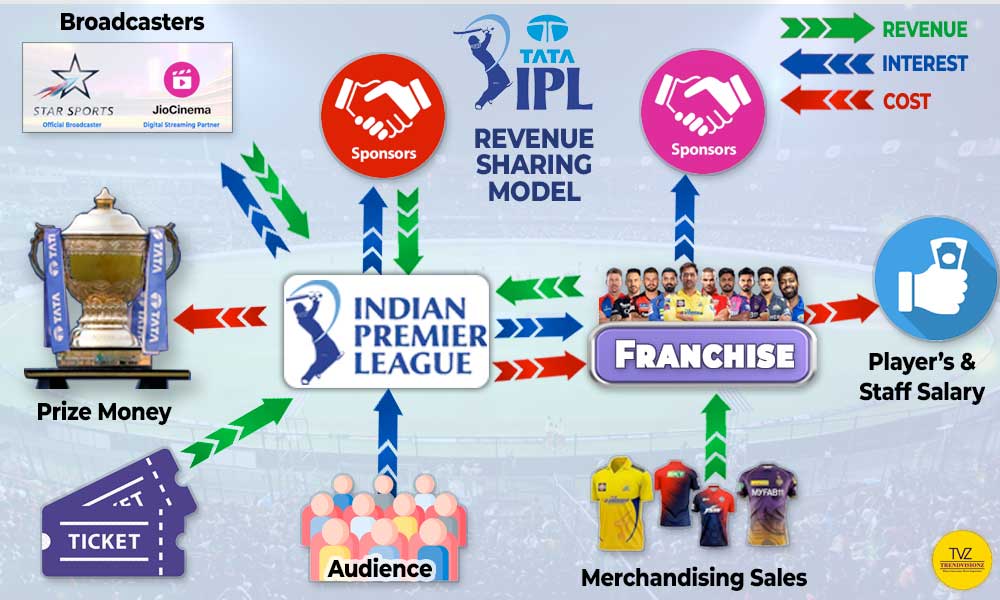
For brands, the league offers access to a highly engaged consumer base across multiple platforms.
A Blueprint for the Future of Sports Business
The IPL’s rise demonstrates how sports leagues can create value by combining media, technology, branding, and fan engagement.
While cricket remains at its heart, the competition has become a case study in sports commercialization and business innovation.
In many ways, the IPL represents the future of sports economics: global audiences, digital distribution, powerful brands, and diversified revenue streams.
What began as a bold experiment in Indian cricket has become one of the most remarkable business success stories of the 21st century.
Photos : trendvisionz.co and miro.medium.com



















There are no comments
Add yours