

AI Data Centers Face a Social Reckoning After U.S. Midterm Voter Backlash
Voters Reject AI Data Center Expansion in 40 of 41 Ballot Measures
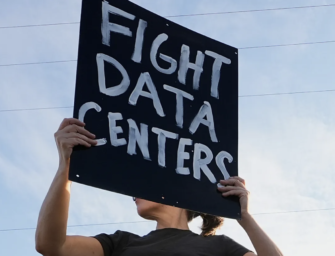
In last week’s U.S. midterm elections, the question of artificial intelligence infrastructure moved from boardrooms and congressional hearings into the messy, local reality of civic democracy. Across ten states, voters confronted 41 ballot measures related to AI data center construction or expansion. They rejected the industry in every single case but one, a contest in Harwood, North Dakota, according to Fortune’s analysis of the results. In many jurisdictions, the opposition cleared 70%, a threshold that suggests something deeper than local NIMBYism.
Exit polls cited by Fortune paint a consistent picture: roughly three quarters of respondents said they oppose having a data center in their own community, and more than half identified AI infrastructure as a major factor in their voting decisions. Candidates who ran on moratoria or stricter permitting processes won competitive races in Texas, Ohio, and Georgia. These were not fringe positions. They were winning ones.
What drove these results? Several months of polling by Gallup and Pew had already indicated that Americans who expect AI to harm society outnumber those who expect it to help, but the specific grievances in local ballots were more concrete. Communities cited soaring energy bills, strained water supplies, disrupted land use, and an absence of meaningful local benefit. The jobs promised are often few; the environmental burden, by contrast, is permanent and visible.
Market Impact: Nasdaq Loses $3 Trillion After Midterm AI Vote
Financial markets did not wait for political analysts to interpret the results. The day after the most consequential ballots were tallied, the Nasdaq fell more than 5%, erasing over $3 trillion in market value across U.S. stocks. Fortune called it the worst second trading day after a midterm in data going back to 1896. The Philadelphia Semiconductor Index recorded its steepest single-day loss since March 2020, with names like Nvidia, AMD, and Micron declining between 9% and 15% before the session closed.
The selloff reflected a specific fear: that new political constraints would force a material slowdown in the AI data center buildout that has powered tech capital expenditure and corporate earnings for the past two years. That buildout has not been modest. Hyperscalers including Alphabet, Microsoft, Amazon, Meta, and Oracle have committed hundreds of billions of dollars to AI-focused data centers in the United States, betting on a demand curve they believed was practically unstoppable. Analysts cited by Fortune now estimate that up to 10% of planned AI data center capacity in the U.S. could be cancelled outright, with another 20% facing regulatory delays long enough to shift their economics.
Technology analyst Dan Ives, widely followed by institutional investors, had previously projected that hyperscaler capital expenditure on AI infrastructure would peak late in the decade. After the midterm results, he revised that view: peak growth could arrive as early as next year, implying a compressed boom with a sharper exit than the industry had modeled.
Beyond the Selloff: How Investors Are Repricing AI Infrastructure Risk
The market reaction was not simply a panic. It was a repricing of regulatory risk that had been largely absent from most AI infrastructure models. Until the midterms, investors tended to treat the physical buildout of AI as a permitting challenge rather than a political one. The ballot results reframed that assumption. Building large data centers in the United States is becoming structurally more difficult, and the cost of community opposition is now visible in stock prices.
The Social Contract AI Companies Now Need to Build
Fortune’s post-election commentary, by analyst Mark Minevich, makes a pointed argument: the backlash is not an obstacle to be managed with better public relations. It is a signal that the industry’s implicit model, in which communities absorb the costs of AI infrastructure while benefits flow mainly to distant shareholders, is no longer politically viable.
The proposed remedy is a formal social contract between AI companies and the communities that host their facilities. Under this framework, companies would pay the full cost of grid upgrades rather than socializing those expenses onto local ratepayers. They would publish annual data on water consumption and energy use in formats accessible to non-specialists. They would commit to flexing load during periods of grid stress, reducing the risk of outages in surrounding neighborhoods. And they would share revenues with host communities through mechanisms analogous to the production taxes long applied to oil and gas extraction, giving localities a direct stake in the value being generated.
The logic is not philanthropic. It is strategic. Companies that build this kind of consent into their project timelines early are, in Minevich’s framing, far more likely to avoid the ballot box confrontations that now cost the industry billions in erased market value.
How U.S. Voter Opposition Is Reshaping Global AI Data Center Location
The domestic implications are significant. The global ones may be even more consequential. Executives at major hyperscalers, as reported by Fortune, are already asking whether they should redirect data center investments to other jurisdictions where permitting is faster, public attitudes are more accommodating, or industrial policy actively encourages hosting large-scale compute.
That question carries strategic weight far beyond the United States. South Korea is pressing ahead with expanded chip manufacturing capacity; Samsung’s new semiconductor campus in Pyeongtaek, built to supply AI-related demand, signals that some countries intend to deepen their position in the AI supply chain rather than slow it. The Middle East has also been an aggressive recruiter of AI infrastructure investment, with governments offering land, energy deals, and streamlined approvals. In Europe, the picture is more varied, with some countries racing to attract hyperscaler investment and others reinforcing regulatory frameworks that complicate approvals.
Fortune’s commentary poses the sharpest version of the dilemma directly: if the United States makes it harder to build AI data centers at home, is it effectively ceding part of the race to countries more willing to absorb the costs? The framing may be too binary. American labs and companies can run facilities abroad while keeping their intellectual property and talent at home. But the longer the domestic slowdown persists, the more the question matters for policymakers on both sides of the Pacific.
What the Midterm Results Mean for AI Infrastructure Strategy
The AI data center boom is not over. Capital is still flowing, valuations remain high, and demand for compute continues to grow faster than any previous technology cycle. What changed on election night is the assumption that the buildout could proceed indefinitely on the same terms. For business leaders, the lesson is practical: social license is now a line item in infrastructure planning, not an afterthought. For investors, the lesson is that regulatory risk in physical AI infrastructure was underpriced, and recalibrating for it is not pessimism but prudence. The midterm voters who turned out against data centers were not anti-technology. Many of them use the services those facilities power every day. What they asked for was a fair deal, and the industry’s next move is to figure out what that deal actually looks like.
















There are no comments
Add yours