

Nvidia After Jensen Huang: A Founder’s Sudden Exit Tests the Whole AI Ecosystem
What Triggered Huang’s Sudden Departure
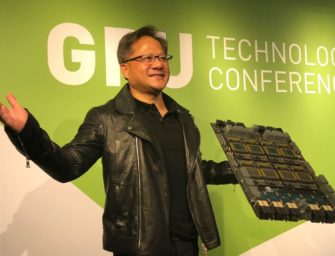
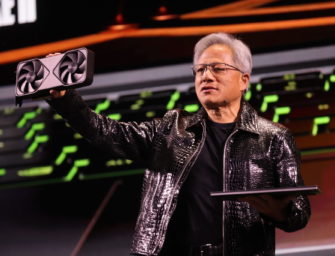
For the past decade, Jensen Huang was not just Nvidia’s CEO. He was the AI boom’s most recognizable face, the man who showed up at industry events in a leather jacket and delivered keynote speeches that read more like secular prophecies than product launches. That image collapsed on November 11, 2026, when Nvidia’s board announced his resignation as president, CEO, and board member, following a week of escalating scandal.
The core facts are stark. Huang admitted to extramarital affairs, including one with a woman whom U.S. intelligence officials identified as a suspected Chinese spy, reportedly linked to Megaspeed, a Singapore-based data center company and one of Asia’s largest buyers of Nvidia chips. A separate relationship with the company’s vice president of healthcare raised additional questions about internal compliance. As reports surfaced, Nvidia’s stock fell by as much as 14 percent, briefly dragging the company below a $4 trillion market capitalization before a partial recovery. An independent investigation has been opened, though Nvidia stated it had “no reason to believe” that U.S. national security or company trade secrets were compromised.
What comes next is both a corporate succession story and something larger: a test of whether the AI boom is structurally sound enough to outlast the departure of its most visible champion.
The Governance Architecture That Made It Possible
One of the more revealing aspects of this story is not the scandal itself but how quickly the board was able to act. Huang owned less than 4 percent of Nvidia’s stock and held no super-voting rights, a governance structure that stands in sharp contrast to other tech giants where founders have locked in control through dual-class share arrangements. At Meta, Mark Zuckerberg’s voting structure gives him decisive power regardless of his shareholding percentage. At Nvidia, the board retained full legal authority to accept Huang’s resignation at any moment, and it used that authority without hesitation.
The national security dimension adds another layer to this governance story. Megaspeed, the Singapore-based firm reportedly connected to Huang’s relationship with the suspected Chinese spy, is described in reporting as one of Asia’s largest buyers of Nvidia chips. The convergence of a personal relationship, a major hardware customer, and an intelligence connection has drawn scrutiny from Congress and the FBI, complicating the board’s task of managing a reputational crisis under intense public pressure. Nvidia’s public position is carefully limited: the company has stated that an independent investigation is underway and that there is no current evidence of a security breach, but the investigation remains open.
This matters because it reframes the conversation about founder-CEO power in AI companies. The sector has normalized the idea of visionary founders who are practically irreplaceable, partly because they often engineer their own irreplaceability through share structures and board composition. Huang’s exit shows what happens when that branding exists but the legal architecture does not back it up. It also raises a pointed question for investors and partners of other AI companies: how many have actually mapped the governance levers available if a similar crisis emerged at a firm they depend on?
An Interim CEO and an Open Succession Question
The board moved quickly to fill the void. Colette Kress, Nvidia’s chief financial officer, was appointed interim CEO, while Harvey C. Jones became the company’s first-ever board chair, a position that did not exist in Nvidia’s governance structure during Huang’s tenure. The dual appointment signals an attempt to distribute authority that had previously been concentrated in a single person.
Kress’s promotion, however, comes with a complicating footnote. TechCrunch reported that Huang himself had described her as “a deer in the headlights” during a summer presentation, a characterization that immediately shaped investor perceptions of the transition. Whether that remark reflected a genuine assessment or a moment of executive frustration, its effect is real: markets and analysts are scrutinizing her first moves with skepticism already baked in.
Longer-term succession speculation has focused on Nico Caprez, Huang’s son-in-law and Nvidia’s vice president of global AI infrastructure growth. His name has surfaced in Fortune’s reporting as a potential candidate, though no formal process has been announced. The absence of a pre-designated successor is itself a governance finding. Harvard Business Review notes that replacing a founder-CEO whose personal identity is deeply tied to a company’s market strategy is among the most difficult transitions in corporate leadership, partly because a successor cannot simply replicate a persona but must build an entirely new relationship with investors and customers.
What the Exit Means for the AI Ecosystem
The human drama around Huang’s departure should not obscure the structural stakes. Nvidia is not merely a large technology company; it is the hardware layer on which much of the current generation of AI development runs. Its GPUs power the training and inference of frontier models at companies like OpenAI and Anthropic. Its chips are the subject of export controls and active regulatory debate, treated as critical infrastructure by governments and enterprises worldwide.
Crunchbase News reported that, prior to the crisis, Nvidia was the most active corporate investor in startups during 2026, participating in more than 120 funding deals spanning AI models, data center operators, robotics, and healthcare. That investment activity was not purely financial; it was strategic, designed to extend Nvidia’s ecosystem reach across the AI stack. A leadership change that triggers a shift in investment philosophy, or simply a period of organizational caution, could have ripple effects for startups that had come to view Nvidia as both a capital partner and a customer. Beyond direct investment, Nvidia’s chips are embedded in the supply chains of hundreds of companies, and any prolonged strategic uncertainty over hardware roadmap priorities would propagate through those relationships in ways that are difficult to quantify but easy to anticipate.
Fast Company observed that Huang served as one of AI’s foremost public evangelists, whose speeches and political engagements helped sustain investor and public enthusiasm for the sector. His absence creates a narrative vacuum at a moment when AI’s critics are growing louder and governance concerns are reaching policymakers. That is not an easy position for the industry’s most important hardware company to find itself in.
Nvidia’s situation is, in the end, a stress test for a broader question: how much of the AI boom rests on durable products and ecosystems, and how much depends on the credibility of specific individuals? The early evidence suggests the ecosystem can absorb the immediate shock. But the succession question is unresolved, the investigation is ongoing, and the geopolitical dimension shows no sign of fading. The coming months will determine whether AI’s central hardware supplier can complete its first real leadership transition, and what kind of company emerges on the other side.













There are no comments
Add yours